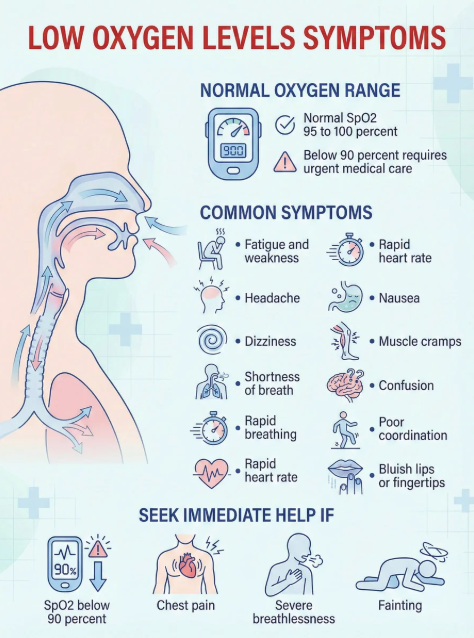
Your father gets breathless walking from the living room to the kitchen. Your mother’s fingertips look a little pale after a bad flu, and the clinic mentions her oxygen reading came back lower than they’d like. Somewhere in that conversation, someone says “oxygen concentrator,” and now you’re researching medical equipment for a parent who can’t easily explain what the doctor actually told them.
A portable oxygen concentrator is a medical device that draws in room air, filters out nitrogen and other gases, and delivers concentrated oxygen through a nasal tube or mask, at a flow rate your doctor prescribes based on blood oxygen testing. It’s prescribed when someone’s blood oxygen level drops too low on its own, most often due to COPD (chronic obstructive pulmonary disease), certain lung diseases, or recovery from a serious respiratory illness, not simply because someone feels tired or breathless once in a while.
What’s the difference between a portable oxygen concentrator and a CPAP machine?
A portable oxygen concentrator adds extra oxygen to the air you breathe, while a CPAP machine uses ordinary room air at pressure to keep your airway open. They solve two different problems and one rarely substitutes for the other.
CPAP (Continuous Positive Airway Pressure) therapy treats obstructive sleep apnea by splinting the airway open with pressurised air through the night; the air itself is regular room air, not oxygen-enriched. An oxygen concentrator, by contrast, is prescribed when someone’s blood oxygen saturation is measurably low, a condition called hypoxemia, most commonly linked to chronic lung conditions like COPD, pulmonary fibrosis, or recovery from severe pneumonia. Some patients, particularly those managing both a respiratory condition and sleep apnea, may eventually need both devices, but a doctor decides that based on testing, not guesswork.
This mix-up comes up often in Malaysian households, since online searches for “oxygen concentrator” and “CPAP machine” tend to surface together. If you’re not certain which device a parent actually needs, ask their treating physician directly rather than researching which one to buy first.
Who typically needs a portable oxygen concentrator at home?
Portable oxygen concentrators are typically prescribed for people with a confirmed drop in blood oxygen levels, most often adults managing COPD, interstitial lung disease, or recovering from a serious respiratory illness.
– People diagnosed with chronic obstructive pulmonary disease (COPD) whose oxygen saturation drops during activity or sleep.
– People recovering from pneumonia or another lung infection where oxygen levels haven’t yet returned to normal.
– People with certain heart conditions where low blood oxygen is a contributing factor, as assessed by their cardiologist or pulmonologist.
– Elderly family members whose doctor has ordered pulse oximetry or an arterial blood gas test showing saturation below a safe level.
None of these apply just because someone tires easily or feels breathless climbing stairs. Breathlessness has many possible causes, and only a doctor, usually working from a pulse oximeter reading or blood gas test, can confirm whether supplemental oxygen is actually needed. Once a family member is prescribed oxygen therapy, that prescription specifies the flow rate and hours of daily use. Those settings come from their doctor and shouldn’t be adjusted based on how someone feels on a given day.
What should you look for when choosing a portable oxygen concentrator in Malaysia?
The right portable oxygen concentrator matches your doctor’s prescribed flow rate, fits your family’s daily routine, and comes with dependable local servicing, not just the lowest sticker price.
1. Flow rate range. Concentrators are rated for a specific flow rate range, measured in litres per minute. The unit you choose needs to reliably deliver what’s been prescribed, ideally with some margin if your doctor adjusts the prescription later.
2. Continuous flow versus pulse dose. Continuous flow delivers oxygen steadily regardless of breathing pattern and is often preferred for higher-need patients or overnight use. Pulse dose releases oxygen only when it senses an inhale, which extends battery life for daytime, on-the-go use. Your doctor’s prescription usually specifies which mode suits your case.
3. Weight and portability. If your parent still gets out to visit friends or attend family events, a lighter unit with longer battery life matters more than it might seem on paper. If the concentrator will mostly sit at home, a stationary or heavier unit can be the more cost-effective choice.
4. Noise level. A concentrator running for hours in a living room or bedroom becomes part of the household’s daily background. Ask to hear a unit running before committing to it, if you can.
5. Local servicing and support. Filters need regular replacing, and machines occasionally require technical servicing. A supplier with a Malaysia-based service team who can troubleshoot or repair a unit without weeks of delay matters more once the machine is actually part of someone’s daily routine, especially given how dust and humidity add wear in this climate.
How much does a portable oxygen concentrator cost in Malaysia?
Portable oxygen concentrators in Malaysia typically range from around RM 6,000 to RM 12,000 and up to purchase, depending on flow capacity, portability, and brand, and some suppliers also offer rental or instalment arrangements.
Entry-level pulse-dose units built for lighter, mobile use generally sit toward the lower end of that range, while higher-capacity continuous-flow units, or those built for heavier daily use, cost more. As with CPAP equipment, price isn’t the only variable worth weighing. A cheaper unit that can’t reliably hit a parent’s prescribed flow rate, or that comes with no local servicing support, can end up costing more in downtime and repairs than a better-matched unit would have. If the upfront cost is a concern, ask your supplier whether instalment plans are available; Junnimed, for example, offers 0% interest instalment plans of up to 6 months on eligible equipment, which can make a clinically necessary purchase easier to plan around.
Insurance and employer medical panels sometimes partially cover home oxygen equipment once it’s prescribed following a documented diagnosis, though coverage varies significantly by insurer. It’s worth asking your provider directly rather than assuming either way, and asking your equipment supplier whether they can help with the documentation an insurer typically requires.
How does Junnimed support families through home oxygen therapy?
Junnimed helps Malaysian families move from a doctor’s oxygen prescription to a working setup at home, covering machine selection, delivery and setup, and ongoing servicing, rather than shipping a box and leaving families to work out the rest on their own.
Getting the device is only the first step. Families are often left managing filter changes, tubing replacement, and troubleshooting an unfamiliar machine for a parent who isn’t confident operating it themselves. Junnimed’s team can walk through setup, explain what to check day to day, and handle preventive maintenance and technical servicing when something isn’t working as it should, the same ongoing support model the company applies to CPAP therapy for sleep apnea patients. If a parent has also been flagged for possible sleep apnea alongside a respiratory condition, or daytime sleepiness is part of the same picture, that’s worth raising with their doctor separately, since a sleep study is the only way to confirm whether CPAP therapy is also appropriate.
If a doctor has prescribed home oxygen therapy for you or a family member, or you’re waiting on test results and want to understand the options in advance, Junnimed KL’s team can walk you through the concentrator models available, current pricing, and instalment options, and answer questions about what home oxygen therapy actually involves day to day.
Browse the range of oxygen concentrators and home respiratory equipment, or book a consultation to talk through which setup fits your family’s situation.
